訪日ファン向け案内は翻訳より「迷う場所」の設計から|ゲーム・アニメイベントの多言語対応
英語の注意書きを増やしても、海外から来たファンが入口でどの列に並ぶのか、物販で何が買えるのか、困ったとき誰に聞くのかを判断できなければ、案内は機能しません。多言語対応を「翻訳する文字数」ではなく「迷いやすい場面と現場責任者」で設計することが、主催法人にとっての出発点です。
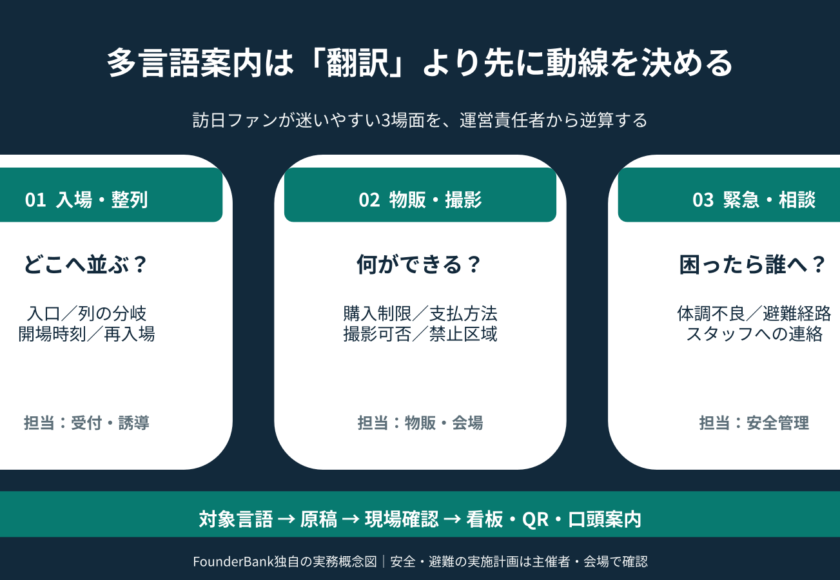
架空のゲーム・アニメファンイベントを想定すると、入口・物販・緊急時では必要な情報も更新担当も異なります。観光庁は観光地などで外国人目線に立った多言語案内を重視していますが、以下の表はその考え方をイベント運営に応用したFounderBank独自の実務整理です。会場の安全・避難計画は主催者と会場・専門家が別途確認してください。
| 来場者が迷う場面 | 先に明示する情報 | 最終確認担当の例 |
|---|---|---|
| 入場・整列 | 入口、列の分岐、開場時刻、再入場 | 受付・誘導 |
| 物販・撮影 | 購入制限、支払方法、撮影可否、禁止区域 | 物販・会場運営 |
| 体調不良・緊急 | スタッフ連絡先、救護場所、避難案内 | 安全管理・会場 |
参考にした公開資料
- 観光庁「観光地域における案内表示等の充実」のページ:観光立国推進基本計画に基づき、公共交通機関、美術館・博物館、観光地などで外国人目線に立った多言語対応を強化・改善する方針と、「観光立国実現に向けた多言語対応の改善・強化のためのガイドライン」を策定した経緯が説明されています。
- 観光庁「地域観光資源の多言語解説整備支援事業」の資料(発行時期の記載なし):訪日外国人旅行者から、必要な情報が不足している、内容が難しすぎる、英語表現が不自然だといった声があることを課題とし、日本語原稿の単純な翻訳ではなく外国人目線の解説文を作る方針が示されています。
- 東京海上ディーアール「イベントにおける群集管理の重要性について」(2023年3月10日):混雑対策の事前広報について、東京都渋谷区で多言語による呼びかけが行われた事例が紹介されています。
1. 誰に、どの言語で伝えるかを来場者像から決める
多言語対応というと、まず対応する言語の数が話題になりがちです。ここは出典に基づかない一般的な整理ですが、どの国や地域からの来場者を想定するのか、チケットの販売経路や過去の問い合わせの傾向から確認し、それに合わせて言語の優先順位をつけると、限られた予算を効果的に使いやすくなります。すべての案内を同じ言語数で用意するのではなく、事前告知、会場内の表示、当日の口頭案内のそれぞれについて、必要な言語を分けて考える方法もあります。
2. 日本語の原稿を訳すのではなく、外国人目線で書く
観光庁の事業資料は、必要な情報が足りない、内容が難しすぎる、英語表現が不自然だという旅行者の声を課題として挙げ、日本語の原稿をそのまま翻訳するのではなく、外国人目線の解説文を作る方針を示しています。イベントでも、日本の来場者には当たり前の習慣(開場前の整列の仕方、撮影やグッズ購入のルール、携帯電話や荷物の扱いなど)が、海外からの来場者には伝わっていないことがあります。何を補って書くかを、案内文の段階から考えておきたい点です。
3. 作成と確認の流れを決める
同じ資料には、現地取材、執筆、編集、内容確認(地域協議会や内容監修者)、スタイルチェック、校正の順に進め、英語のネイティブが関わる作成フローが示されています。観光地の解説文を想定した流れなので、イベントの案内にすべて当てはめる必要はありません。ただ、誰が原稿を作り、誰が内容を確認し、誰が最終確認をするのかを決めておくことは、直前の修正が増えやすいイベントでも役に立ちます。ルールや注意事項の文言は、運営側の担当者が内容を確認する工程を残しておくと、誤った案内を防ぎやすくなります。
4. 表示・音声・二次元コードなど、伝える手段を組み合わせる
観光庁の資料では、活用事例として、看板の改善、多言語の字幕付きのタッチパネル式解説板、多言語の音声やテキストを読み取れる二次元コードによる案内が挙げられています。イベントでは、会場の掲示だけで伝えられる情報には限りがあります。事前告知のウェブページ、当日のスタッフの声かけ、二次元コードから読めるルール説明など、手段を組み合わせる考え方が参考になります。どの手段を選ぶかは、会場の条件や予算、来場者の使う端末によって変わるため、ここも一般的な整理です。
5. 安全・緊急時の案内と、問い合わせの窓口を決める
混雑や緊急時の案内は、誤解が起きると影響が大きい場面です。東京海上ディーアールのレポートは、分散来場や最寄り駅以外の利用を呼びかける事前広報が提言されていることを紹介し、渋谷区の事例では多言語で呼びかけが行われたとしています。イベントでも、入場や退場の案内、避難の案内、体調不良の来場者への対応などを、どの言語でどう伝えるかをあらかじめ決めておくと、現場で迷いません。あわせて、来場者が困ったときの窓口の場所や連絡手段を、事前告知と会場内の両方で示せるようにしておくことが大切です。
FounderBankへのご相談について
FounderBankのサイトには、日本のアニメ・ゲーム・声優などを活用したイベントやキャンペーンを計画する法人や、日本のIPを海外で展開したい海外企業向けに、イベント提携や企画制作を支援すると記載されています。ただし、翻訳や通訳そのものの提供、会場の表示物の制作、安全管理の判断は、本記事の範囲にも当社の支援内容として確認できた範囲にも含まれません。本記事は一般的な情報提供であり、特定の結果を保証するものではありません。実際の案内文や表示は、主催者、会場、翻訳の専門家が個別に確認してください。
For International Fans, Design the Decision Points Before Translating the Signs
More English text does not necessarily make a Japanese anime or game event easier to navigate. A visitor still needs to know which queue to join, what the merchandise rules mean, and where to find help. Start with the moments when a fan must make a decision, not the number of words to translate.
For a hypothetical event, the following FounderBank planning matrix applies the visitor-first approach described in Japan Tourism Agency guidance to three event situations. The agency’s materials address tourism facilities, not event safety certification; the organizer and venue remain responsible for actual safety and emergency procedures.
| Decision point | Information to make clear | Example owner |
|---|---|---|
| Entry and queues | Entrance, queue branches, opening and re-entry rules | Reception and wayfinding |
| Merchandise and photos | Purchase limits, payments, permitted photography | Sales and venue operations |
| Health and emergencies | Help contact, first-aid point, evacuation instructions | Safety lead and venue |
Materials we looked at
- The Japan Tourism Agency page on improving guidance signs in tourist areas: it explains a policy of strengthening and improving multilingual support from the viewpoint of foreign visitors at public transport, museums and tourist sites, and the guideline created for that purpose.
- A Japan Tourism Agency document on its project supporting multilingual explanations of regional tourism resources (no date is stated): it lists complaints from visitors, such as missing information, content that is too difficult and unnatural English, and sets a policy of writing explanations from a foreign visitor's perspective rather than simply translating Japanese drafts.
- A report by Tokio Marine dR dated March 10, 2023: it introduces a case in Shibuya Ward, Tokyo, where crowd-related appeals were made in several languages.
1. Decide the languages from your expected audience
Discussions of multilingual support often start with the number of languages. This is a general suggestion that is not based on a source: check which countries and regions your visitors are likely to come from, using ticket sales channels and past inquiries, and prioritize languages accordingly. You can also decide languages separately for advance notices, signs at the venue and spoken guidance on the day, instead of preparing every item in the same number of languages.
2. Write from the visitor's perspective, not just a translation
The agency's project document lists missing information, content that is too difficult and unnatural English as visitors' complaints, and sets a policy of creating explanations from a foreign visitor's perspective instead of translating Japanese drafts as they are. At events, customs that are obvious to Japanese visitors, such as how to line up before the doors open, rules on photography and merchandise, and handling of phones and luggage, may not be known to visitors from overseas. Think about what to add when you write the notice itself.
3. Decide how texts are created and checked
The same document describes a flow of on-site research, writing, editing, content review, style check and proofreading, with native English speakers involved. It assumes explanations for tourist sites, so you do not need to apply every step to an event. Still, deciding who drafts the text, who checks the content and who gives final approval is useful at events, where last-minute changes are common. Keeping a step in which an operations staff member checks the wording of rules and notices helps prevent wrong guidance.
4. Combine signs, audio and QR codes
The agency's materials give examples such as improved signboards, touch-panel guides with multilingual subtitles, and two-dimensional (QR) codes that give access to multilingual audio and text. At an event, a sign at the venue can carry only so much information. Combining an advance information page, staff on the day and rules readable from a QR code is a useful way to think. The best mix depends on the venue, the budget and the devices visitors use, so this is also a general suggestion.
5. Plan safety and emergency guidance, and a contact point
Guidance on crowding and emergencies matters most when misunderstandings occur. The Tokio Marine dR report introduces advance notices that encourage staggered arrival and the use of stations other than the nearest one, and describes a case in Shibuya Ward where such appeals were made in several languages. Decide in advance in which languages and how you will announce entry and exit instructions, evacuation and the handling of visitors who feel unwell. Also make sure visitors can find a help desk and a way to contact staff, both in advance notices and at the venue.
About consulting FounderBank
The FounderBank website says it supports companies planning events and campaigns that use Japanese anime, games and voice actors, and overseas companies that want to expand Japanese IP, through event partnerships and project planning. Providing translation or interpretation itself, producing signs for a venue and judging safety are outside the scope of this article and outside what we could confirm on the site. This article is general information and does not guarantee any specific result. Please have the organizer, the venue and translation professionals check the actual texts and signs.
お問い合わせ / Contact
日本でのイベント企画のご相談では、想定する来場国・言語、会場規模、案内が必要な場面、現場の確認担当をお知らせください。お問い合わせフォームは日本語です。
For a focused discussion about an event in Japan, share the expected visitor markets, languages, venue size, key wayfinding decisions and operational owners. The inquiry form is in Japanese.
https://founderbank.jp/contact/
参考資料 / References
- 観光庁:観光地域における案内表示等の充実 / Japan Tourism Agency: improving guidance signs in tourist areas
- 観光庁:地域観光資源の多言語解説整備支援事業の資料(発行時期の記載なし) / Japan Tourism Agency: multilingual explanation support project (no date stated)
- 東京海上ディーアール:イベントにおける群集管理の重要性について(2023年3月10日) / Tokio Marine dR: crowd management at events
- https://founderbank.jp/
- https://founderbank.jp/services/




この記事へのコメントはありません。