企画の魅力より先に、相手が「判断できる情報」を渡す
海外スタジオが「日本のIPと組みたい」と伝えるだけでは、相手は権利者への確認も社内稟議も始めにくいものです。FounderBankが海外企業との協業を検討する際に重視したいのは、作品の説明量よりも、誰が何を決めれば次の段階へ進めるかという判断材料です。資本提携、スポンサー、ライセンス、共同制作は同じ言葉で一括りにせず、最初の1枚で区別することを提案します。
記入例:海外ゲームスタジオの日本向け小規模体験企画(架空)
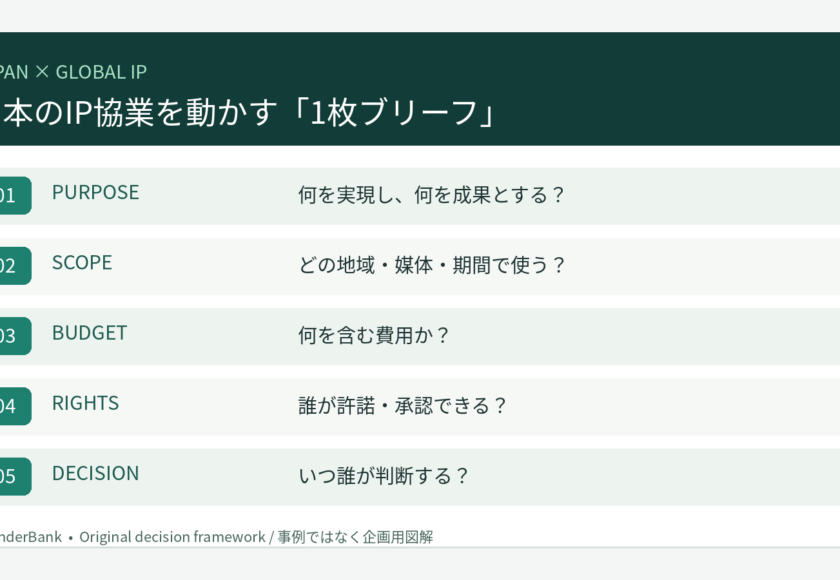
- 目的:新作オリジナルゲームのキャラクターに日本の来場者がどう反応するかを確かめる。
- 展開範囲:日本国内の限定的な体験イベント。商品化や配信利用は別途協議。
- 費用:企画・制作・会場・出演者・素材使用を区分し、上限と未確定項目を明記。
- 権利:スタジオ保有IPと、他社作品・出演者・音楽等の権利を分け、許諾状況は未確認と表示。
- 次の判断:日本側候補パートナーが企画概要を評価し、実施可否・条件・承認経路を協議する。
これは成立済み案件でも提供保証でもなく、初回商談で議論を具体化するための仮想例です。まずこの5行を持参するだけで、相手は「関心があるか」だけでなく「何を確認すべきか」を返しやすくなります。
日本のIPと協業する前に|海外企業が最初に用意したい「協業ブリーフ」の5項目
日本のアニメ・ゲーム・キャラクターなどのIP(知的財産)と組んで、商品やイベント、コンテンツを作りたい。そう考える海外のゲームスタジオ、ブランド、イベント主催者は少なくありません。ところが最初の打ち合わせで話が進みにくくなる原因の多くは、熱意の不足ではなく、「何を、どこで、いつまでに、誰の承認で進めるか」が整理されていないことにあります。そこで役に立つのが、依頼の要点をまとめた「協業ブリーフ」です。A4で1枚から数枚程度でも、相手が判断しやすくなります。
この記事では、協業ブリーフに入れておきたい5つの項目を紹介します。ここで述べるのは実務上の一般的な整理であり、FounderBank の所定の書式や、特定の作品の権利状況を示すものではありません。契約の条件は案件ごとに異なるため、最終的な内容は当事者間で確認してください。
1. 協業の目的と「うまくいった」といえる状態
最初に書くべきなのは、協業で何を実現したいのかです。たとえば、新作ゲームの認知を高めたいのか、自社ブランドの商品に日本のIPの世界観を加えたいのか、イベントの集客を支える企画がほしいのか。目的によって、組むべき相手も、必要な期間も、判断の基準も変わります。
あわせて、「うまくいった」といえる状態を、社内で言葉にしておくことをおすすめします。数字で測れる目標を置く場合は、その根拠になるデータを自社で用意できるかを確認してください。目標が曖昧なままだと、相手側も提案の方向を絞れません。
2. 展開する地域・媒体・期間
次に、どの国や地域で、どの媒体(商品、配信、イベント、広告など)で、いつからいつまで使いたいのかを書きます。これは企画の範囲を決めるだけでなく、後で述べる権利の整理にも直結します。作品や素材を使える範囲は、方法、地域、期間によって区切って決めるのが一般的だからです。
最初から全地域・全媒体・無期限を望むと、調整に時間がかかり、費用の見通しも立ちにくくなります。まず優先する市場と媒体を絞り、将来の拡張は「第2段階の希望」として分けて書くと、相手が検討しやすくなります。
3. 予算の考え方と、含むもの・含まないもの
予算は、総額だけでなく、何を含むのかを書くと伝わりやすくなります。企画・制作の費用、素材や作品を使うための対価、出演者やクリエイターの手配にかかる費用、現地での運営やプロモーションの費用などが、ひとつの金額に含まれるのか、別枠なのかを整理してください。為替や税、支払いのタイミングも、早めに触れておくと後の食い違いを減らせます。
予算の上限が決まっていない場合は、無理に一つの数字を書くより、検討している幅と、決定までの流れを書くほうが現実的です。出演者やクリエイターの条件、素材の使用条件は、確認してみないと分からない部分が多いため、見積りは前提条件つきになることを織り込んでおきましょう。
4. 権利の扱いと承認の窓口
協業ブリーフで、最も早く書いておきたいのが権利の考え方です。文化庁の著作権契約マニュアルは、著作権の譲渡と利用許諾を区別しています。譲渡は著作権そのものを相手に移すもので、二次的著作物に関する権利も含めたい場合は、その旨を明記する必要があるとされています。利用許諾は、著作権を持つ側に権利を残したまま、認める利用の方法を決める形で、特定の相手にだけ独占的に認める場合は、その旨と期間・地域を書くとされています。
また、制作を依頼しただけでは、完成物の著作権が依頼した側に移るわけではなく、帰属は契約で定める必要があります。作品の現物や複製物を買っても得られるのは所有権であり、著作権は別の合意が必要です。著作者人格権は譲渡できないため、改変を認めてもらう場合は事前の了解が要ります。さらに、翻訳や映画化のような二次的著作物を利用するときは、二次的著作物の著作者に加えて、原作の著作者の了解も必要になる、と文化庁の著作権テキストは説明しています。
協業ブリーフには、これらを踏まえて、次の点を書いておくと話が早く進みます。どんな利用を想定しているか(商品化、配信、広告、イベントでの使用など)。改変や二次創作を伴うか。録音・録画や配信など、後から行う利用があるか。承認が必要な相手は誰で、確認にどれくらい時間を見込むか。口頭の合意は「言った、言わない」になりやすいため、決まった内容は書面に残すことが勧められています。
5. スケジュールと意思決定者
最後に、いつまでに何を決める必要があるのかと、貴社側で最終判断をするのは誰かを書きます。日本側の関係者が複数にわたる企画では、承認の順番が増えるほど時間がかかります。発売日やイベント日などの動かせない日付がある場合は、そこから逆算して、企画の合意、素材の確認、制作、最終承認の目安を置いてください。
貴社側の窓口を一人に決め、返答の期限を共有しておくだけでも、やり取りの停滞は減らせます。時差がある場合は、連絡の頻度と手段(メール、ビデオ会議など)も書いておくと実務が進めやすくなります。
FounderBank にご相談いただけること
FounderBank の事業内容ページでは、日本発の物語を海外に届けるための取り組みとして、海外パートナーの構想を国内のクリエイターと組んで作品化するIPプロデュース&制作などを挙げています。同ページは、海外展開の課題として、ノウハウ不足や、複雑な契約・ライセンス手続きがあるとも述べています。ブリーフが固まっていない段階でも、整理のご相談から始められます。
なお、FounderBank は特定の作品やキャラクター、出演者について、権利の保有や出演の確約をお約束するものではありません。実現の可否や条件は、権利者や関係者との確認を経て決まります。また、本記事は法律上の助言ではありません。
Give a Japan-side partner a decision brief, not only a creative pitch
“We want to collaborate with a Japanese IP” is an ambition, not yet a proposal someone can approve. At FounderBank, a useful starting point is to separate licensing, sponsorship, co-production and investment, then identify the decision needed to move the project forward. The goal is not to claim a deal exists; it is to make the next discussion concrete.
Illustrative one-page brief: a small Japan pilot for an overseas original game (hypothetical)
- Purpose: Test how Japanese visitors respond to a new original game character.
- Scope: A limited in-person experience in Japan; merchandise and streaming rights remain outside the initial proposal.
- Budget: Separate planning, production, venue, talent and rights costs; show ceilings and unknowns.
- Rights: Identify the studio-owned IP separately from third-party music, performers and other materials; mark unverified permissions as pending.
- Decision: Ask a prospective Japan-side partner to evaluate fit, conditions and approval paths before making any commitment.
This is a planning example, not an existing project or an offer of guaranteed rights, financing or access. It is designed to help a studio CEO get a specific next-step response rather than a polite but noncommittal introduction.
Before Partnering with a Japanese IP: Five Items Overseas Companies Should Put in a Collaboration Brief
Many overseas game studios, brands, and event organizers want to work with Japanese anime, game, and character IP. In first meetings, talks often stall not because of a lack of enthusiasm, but because it is unclear what is wanted, where, by when, and with whose approval. A collaboration brief, even one to a few pages long, helps the other side make decisions. This article describes five items worth including. It is a general, practical outline; it is not a FounderBank-specific format, and it says nothing about the rights status of any particular work. Terms differ from project to project, so please confirm the final details between the parties.
1. Purpose and what success looks like
State what you want from the collaboration: raising awareness of a new game, adding a Japanese IP world to your brand's products, or building a program that supports event attendance. Write down in words what success would look like inside your company. If you set numerical targets, make sure you can back them with your own data.
2. Regions, media, and period
Say in which countries and regions, through which media (products, streaming, events, advertising), and for what period you want to use the work. This shapes the scope of the project and also feeds directly into how rights are organized, because permitted uses are usually defined by method, region, and period. Narrowing the first phase to priority markets and media, and listing expansion as a second-phase wish, makes the request easier to evaluate.
3. Budget, and what is included or excluded
Explain not only the total but what it covers: planning and production, fees for using the work, arranging performers or creators, and local operations or promotion. Mention exchange rates, taxes, and payment timing early. If the budget is not fixed, a range and a decision process is more realistic than a single figure. Quotes will often come with conditions, because many terms can only be confirmed after checking with the people involved.
4. Handling of rights and the approval contact
Japan's Agency for Cultural Affairs, in its copyright contract manual, distinguishes an assignment of copyright from a license. An assignment moves the copyright itself, and if you want rights in derivative works to be included, this should be stated explicitly. In a license, the rights holder keeps the copyright and the permitted uses are defined; for an exclusive license to a specific party, the period and territory should be written down. Commissioning a work does not by itself move the copyright to the commissioning party, and buying a physical copy gives you ownership of that copy, not the copyright. Moral rights cannot be transferred, so permission for changes should be agreed in advance. The Agency's copyright textbook also explains that using a derivative work, such as a translation or a film adaptation, requires the consent of the author of the original work as well as that of the derivative work.
In your brief, therefore, describe the intended uses (merchandise, streaming, advertising, event use), whether adaptation is involved, whether recording or streaming will happen later, who must approve, and how long approval is expected to take. Oral agreements easily lead to disputes, so putting agreed points in writing is recommended.
5. Schedule and decision-makers
List what must be decided by when, and who makes the final decision on your side. When several Japanese parties are involved, each approval step adds time. If you have fixed dates such as a release or an event, work backward to set targets for agreeing on the plan, checking materials, production, and final approval. Naming a single contact and sharing response deadlines also reduces delays, and so does stating your preferred communication methods across time zones.
What you can discuss with FounderBank
FounderBank's services page lists, among its areas, IP production that turns an overseas partner's concept into a work together with Japanese creators, and it notes that know-how gaps and complex contract and licensing procedures are common obstacles to overseas expansion. You are welcome to consult us even before your brief is complete. FounderBank does not promise that it holds rights to any specific work or character, or that any specific performer will appear. Feasibility and conditions are determined after confirmation with rights holders and others involved. This article is not legal advice.
お問い合わせ / Contact
協業のご相談は、お問い合わせページからご連絡ください(日本語・英語)。
For consultations, please contact us through the inquiry page (Japanese or English).
https://founderbank.jp/contact/



この記事へのコメントはありません。