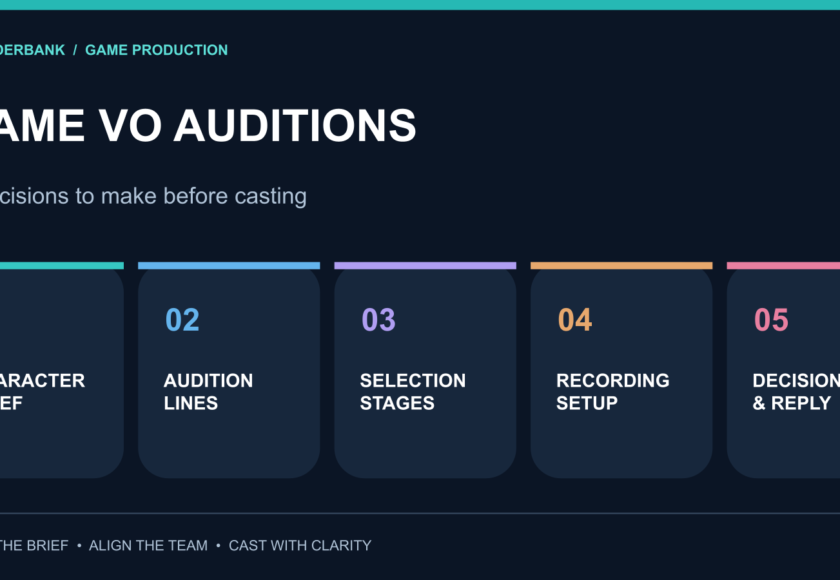
オーディション開始前に決めるべきこと
ゲームのボイス収録では、誰を起用するかを決める選考(オーディション)が品質と進行の両方を左右します。ところが、キャラクターの設定やセリフ、評価の基準が固まらないまま候補者を集めると、聞き比べの軸が定まらず、判断が遅れがちです。この記事では、日本の声優の起用を検討する国内外の法人の発注担当者に向けて、オーディションを始める前に整理しておきたい5つの点をまとめます。なお、ここで述べるのは一般的な整理であり、個別の案件の条件によって進め方は異なります。
1. キャラクター資料を先に固める
ゲームのボイス制作を支援する Side 社の解説では、よいキャスティングは最初のオーディションよりずっと前、明確なキャラクター資料づくりから始まると述べられています。役柄の年齢感、アクセント、文化的背景など、作品上必要な人物像を具体化する重要性を説明しています。日本語のボイスでは、これに加えて口調や一人称、他のキャラクターとの関係性、声の高さや話す速さの印象なども書き添えておくと、候補者と発注側の認識をそろえやすくなります。
2. オーディション用のセリフを選ぶ
同じ解説では、録音の前に準備するものとして、キャラクターの紹介文とオーディション用のセリフが挙げられています。セリフは、そのキャラクターの特徴がよく出る場面を選ぶのが基本です。たとえば、普段の会話、感情が大きく動く場面、戦闘中の掛け声など、声の使い分けが分かる複数の種類を少数用意すると、比較しやすくなります。あわせて、場面の状況や相手役との関係を短く添えておくと、候補者が演技の方向性をつかみやすくなります。
3. 選考の段階を決めておく
Side 社の解説では、選考の流れとして、候補者のショートリストの作成、セルフテープやデモリールの確認、ディレクションを伴うライブオーディションの順が紹介されています。デモは参考になるものの、それだけでは不十分とされ、ライブオーディションではフィードバックの受け止め方、トーンの変化への対応、役への入り込み方を確認できるとされています。本番の最初の収録で、指示への対応や必要なアクセントの維持に問題があると分かる事態を避けるための工程です。
米国の俳優向けメディア Backstage でも、デモやセルフテープによる選考の後にライブオーディションを実施する場合があると説明しています。ただし、日本の声優事務所を通じた選考の手順や人数は案件ごとに確認が必要です。段階の数や候補者の人数は、予算と日程に合わせて自社で決めておきましょう。
4. 録音の形態・日程・素材を先に検討する
Side 社の解説は、台本を送ってオーディション音声を聴く前に、録音場所を検討するよう勧めています。検討項目として、時差、移動費、労働組合の規定、タレントの空き状況が挙げられています。海外の発注側が日本の声優を起用する場合は、リモート収録にするのか、日本のスタジオにするのか、立ち会う担当者は誰かといった点も、早めに決めておくと安心です。
また、収録前に必要なものとして、完成した台本(翻訳を伴う場合は特に)、キャラクター紹介とオーディション用セリフ、ファイルの命名規則、映像などの参照素材が挙げられています。選考の段階から、納品データの名前の付け方まで決めておくと、後工程の混乱を減らせます。
5. 判断する人・評価の基準・結果の連絡を決める
候補者を聞き比べるときは、誰が最終判断をするのか、何を基準に評価するのかを事前にそろえておくことが大切です。評価の項目(キャラクターへの合致度、指示への反応、聞き取りやすさ、他の役との組み合わせなど)を簡単な表にしておき、関係者が同じ視点で聞けるようにすると、意見のばらつきを抑えられます。
結果の連絡についても、あらかじめ時期を決めておきましょう。Backstage は、米国のボイスオーバー選考では合否連絡の時期に幅があり、個別フィードバックが必ずしも行われないことを説明しています。日本の案件で一律の期限を想定せず、連絡予定と連絡窓口を事務所や制作会社に共有しておくと、候補者への案内と社内判断をそろえやすくなります。
発注前のチェックリスト
- 役柄ごとのキャラクター資料と読み方の指示がある
- 候補者に共有可能なオーディション用セリフと守秘範囲を整理した
- 一次選考・追加審査・最終決定の担当者と期限を決めた
- 収録方式、時差、立ち会い、ファイル仕様を整理した
- 評価表、結果連絡窓口、候補者への回答予定を共有した
FounderBank に相談できること
ファウンダーバンク株式会社のサイトでは、声優キャスティングについて、ゲーム、アニメ、広告、プロモーション、イベント向けに、声優の起用を企画段階から実施まで支援すると案内しています。出演者が未定の段階から相談でき、希望する声優の出演が難しい場合は、企画の意図に合う代替候補を相談できるとされています。相談の流れは、問い合わせフォームで企画内容と希望時期を伝え、目的や出演条件を聞き取って進め方を整理し、対応範囲と費用の案内に合意してから候補選定と出演交渉に進む、と掲載されています。英語での問い合わせも受け付けています。特定の声優の起用や出演、結果を約束するものではありません。契約条件や報酬、権利の扱いは、案件ごとに当事者間で取り決め、必要に応じて専門家にご相談ください。
Five pre-audition decisions for game producers
In game voice production, the audition stage strongly affects both quality and schedule. If the character details, lines, and evaluation criteria are not settled before you gather candidates, it becomes hard to compare them and decisions slow down. This article is for corporate buyers, in Japan or overseas, who are considering Japanese voice actors, and it summarizes five points to organize before auditions begin. It is a general overview; the right approach depends on your project.
1. Fix the character brief first
An explainer from Side, a game voice production company, says that great casting begins long before the first audition, with a clear character brief. It emphasizes defining the character’s age range, accent, cultural context, and other story-relevant traits so the casting team can narrow its search. For Japanese-language voices, it also helps to add speech style, first-person pronoun, relationships with other characters, and the impression of pitch and pace.
2. Choose the audition lines
The same explainer lists character bios and audition lines as materials to prepare before recording. Pick lines that show the character’s traits: for example, everyday conversation, an emotionally intense scene, and a battle shout, so you can compare a range of vocal approaches. Adding a short note on the situation and the other speaker helps candidates grasp the intended direction.
3. Decide the selection stages in advance
Side describes a flow of building a shortlist, reviewing self-tapes or demo reels, and then holding a directed live audition. Demos are useful but not sufficient on their own; a live audition lets you check how a candidate takes feedback, adapts tone, and commits to the role. The aim is to avoid discovering in the first real session that a performer cannot take direction or hold the required accent.
Backstage, a US publication for performers, describes demo and self-tape reviews followed, in some cases, by live auditions. Procedures and candidate numbers may differ when working through Japanese agencies. Set the number of stages and candidates according to your budget and schedule.
4. Plan the recording format, schedule, and materials
Side advises considering where recording will take place before sending scripts and listening to audition files, including time zones, travel costs, union rules, and talent availability. If you are an overseas buyer working with Japanese voice actors, decide early whether sessions will be remote or in a Japanese studio, and who will attend.
Side also lists what is needed before recording: a finished script (especially when translation is involved), character bios and audition lines, file naming conventions, and reference materials such as video. Settling these from the audition stage onward reduces confusion later.
5. Decide who decides, the criteria, and when you will respond
Agree in advance who makes the final decision and what criteria you will use. A simple scoring sheet (fit with the character, response to direction, clarity, balance with other roles) helps reviewers listen from the same viewpoint (a general suggestion).
Plan your response timing as well. Backstage notes that response times vary in US voiceover casting and that individual feedback is not always offered. Do not assume the same timing for Japanese agency-led projects. Sharing your response schedule with the agency or production company makes coordination easier.
Buyer checklist
- Prepare a character brief and pronunciation notes for each role.
- Select audition lines that can be shared within the agreed confidentiality scope.
- Assign reviewers and deadlines for shortlisting, callbacks, and final decisions.
- Plan recording format, time zones, supervision, and file specifications.
- Agree on scoring criteria, the communication owner, and response timing.
Consulting FounderBank
FounderBank Inc. states on its website that it supports voice actor casting for games, anime, advertising, promotions, and events, from planning through execution. You can consult even before performers are decided, and if a desired voice actor is not available, you can discuss alternative candidates that fit the intent of your project. The site describes the flow as follows: tell us your plan and preferred timing through the contact form; we hear your goals and conditions and organize the approach; then candidate selection and negotiation begin after you agree to the scope and fee guidance. Inquiries in English are accepted. We do not promise the casting or appearance of any specific voice actor, or any particular outcome. Contract terms, fees, and rights should be agreed between the parties for each project, with professional advice where needed.
Voice actor casting at FounderBank
お問い合わせ / Contact
声優キャスティングやゲームのボイス制作についてのご相談は、お問い合わせページからご連絡ください。企画が固まっていなくても、分かる範囲の情報でご相談いただけます。
For inquiries about voice actor casting or game voice production, please contact us through the contact page. You can reach out even if your plan is not yet finalized.




この記事へのコメントはありません。