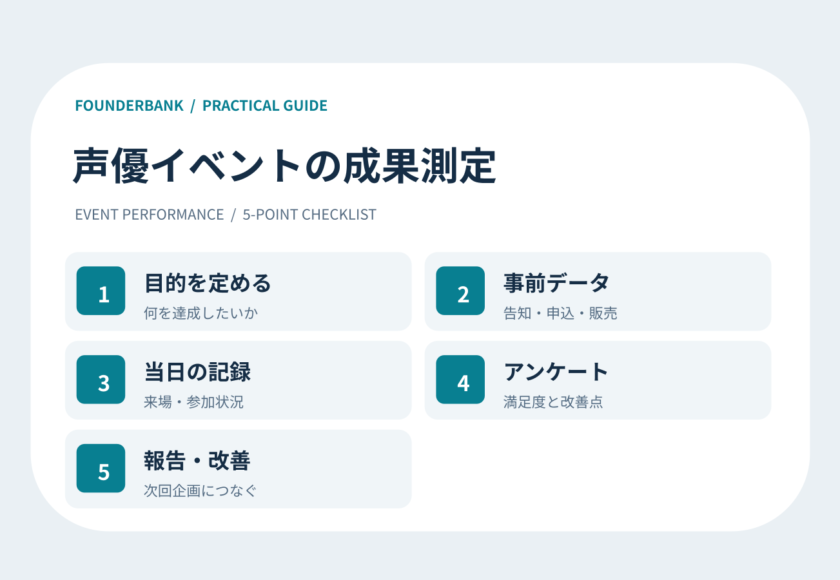
声優ゲストを招くイベントは、準備と当日の運営に目が向きがちです。しかし、終わったあとに「結果をどう評価するか」が決まっていないと、次の企画や社内・協賛先への説明で困ることがあります。この記事では、日本または海外でアニメ・ゲーム関連のイベントを企画する法人の担当者向けに、開催前から整理しておきたい測定の考え方を5つの点にまとめます。
なお、ここで紹介する指標の考え方は、イベント運営全般を扱う外部の解説記事に基づく一般的な内容です。声優イベントに限った調査結果ではなく、数値の目標値を示すものでもありません。個別の企画には、目的に合わせて読み替えてください。
1. 最初に「何のためのイベントか」を一文で決める
測定の出発点は、指標ではなく目的です。イーベ!ナレッジはアンケートの目的を先に定める重要性を説明しています。Zoho Backstageも、来場・満足度・収益などの指標を事業目的に結びつけて評価する方法を紹介しています。
例えば「新作ゲームの認知を広げる」「ファンとの接点をつくる」「協賛企業に参加価値を示す」など、目的は企画ごとに異なります。目的が複数ある場合は、優先順位も決めておくと、報告の場面で迷いません。
2. 開催前から取れるデータを決めておく
チケット販売を伴うイベントでは、販売が始まってから指標を考えるのでは遅くなります。Zoho Backstageの解説では、チケット種別・販売経路ごとの登録データを分けて分析する方法が示されています。開催前から販売経路、告知日、申込数、実際の来場数の記録方法を決めておくと、単なる売上集計を超えた振り返りにつながります。
声優イベントの場合は、出演の発表時期や告知方法によって反応が変わることがあります。そのため、いつ何を告知したかの記録と、販売経路の数字を並べて残しておくと、あとで振り返りやすくなります。出演は確定するまで発表しない、という進め方については、FounderBank のイベント向け声優手配のページにも記載があります。
3. 当日と直後に見る指標を絞る
Zoho Backstageは、登録数、登録から来場への比率、チェックイン、離脱、SNSの反応、満足度、収益などをイベントの評価指標として挙げています。
すべてを追う必要はありません。目的に直結する指標を少数に絞り、誰がどの方法で記録するかを開催前に決めます。会場の入口での計測、ステージ前の滞在状況、物販や展示の反応など、現場のスタッフが取れる情報には限りがあるため、役割分担も前もって整理しておくと安心です。
4. アンケートは目的から逆算して設計する
イベント参加者へのアンケートについて、日本のイベント管理システム会社の解説では、次の点が挙げられています。
- 目的を先に決め、必要最低限の設問に絞ること
- 参加者の記憶が新しいイベント直後に案内すること
- オンラインは集計しやすい一方、QRコードを使えない参加者のために紙も用意すること
- 選択式で定量データを取り、自由記述で詳しい意見を補うこと
- 個人情報を扱う場合は、利用目的を示し、同意の仕組みを用意すること
設問数や配布日数の具体的な目安は、この記事には書かれていません。また、Zoho Backstage の解説は、推奨度を尋ねる質問を使った調査と満足度の質問を、フィードバックの取得に使う方法を紹介しています。海外の参加者が多い場合は、日本語と英語の両方で同じ内容の設問を用意し、回答言語による差が出ないようにすることも検討してください。この点は出典に基づく内容ではなく、一般的な運営上の整理です。
5. 報告書にまとめ、次の企画と契約条件の確認につなげる
Zoho Backstage の解説では、満足度のフィードバックを、来場、反応、収益のデータと突き合わせ、チケット種別や販売経路などで分けて見ることで、何がうまくいったか、次に何を変えるかが分かるとされています。投資対効果の一例として、(総便益 − 総費用) ÷ 総費用 × 100 という計算式も紹介されています。ただし、費用や利益に何を含めるかは企画によって異なるため、事前に社内で定義をそろえてください。
報告書に出演者の名前、画像、映像、音声を載せる場合は、その利用範囲を事前に確認しておく必要があります。FounderBank のサイトには、広告や写真、映像、配信、切り抜き、開催後の再利用などでの名前や肖像の使用範囲を確認項目として挙げています。開催後の報告資料や次回の告知に使い回す予定があるなら、最初の相談の段階で伝えておくと、条件の整理がしやすくなります。なお、この記事は法的な助言ではありません。契約や権利の具体的な判断は、関係者と専門家にご相談ください。
FounderBank に相談するときの情報
FounderBank のサイトには、声優イベントの手配の進め方の最後に、イベントを実施し、目標に照らして結果を評価する工程が記載されています。問い合わせの際は、組織名、開催国と都市、おおよその日程、イベントの形式、希望する出演者像や対象となる来場者、予算の目安を伝えると進めやすくなります。詳細が決まる前の相談もできると案内されています。特定の出演者の確保や出演の約束はできないこと、出演者の発表は条件の確認後に行うことも、サイトに記載があります。
Before You Review an Event’s Results: Five Measurement Points Corporate Organizers Should Decide in Advance
Events with Japanese voice actor (seiyuu) guests tend to focus on preparation and on-site operations. If you have not decided how to evaluate the event afterward, it can be hard to explain results internally, to sponsors, or when planning the next event. This article is for corporate staff planning anime and game events in Japan or overseas, and it summarizes five points to organize before the event.
The metrics below come from general event-management articles by third parties. They are not research specific to voice actor events, and they do not give target figures. Please adapt them to your own project.
1. Decide in one sentence what the event is for
Measurement starts with the goal, not the metric. The E-VE survey guide recommends defining the survey’s purpose before choosing questions. Zoho Backstage explains how to connect attendance, satisfaction and revenue metrics to business objectives.
Goals differ by project: building awareness of a new game, creating fan touchpoints, or showing value to sponsors. If you have several goals, rank them so that your report stays focused.
2. Decide which data you can collect before the event
For events with ticket sales, waiting until sales open to choose metrics is too late. Zoho Backstage describes segmenting registration data by ticket type and marketing source. Decide in advance how to record the announcement date, sales channel, registrations and actual attendance, rather than looking at revenue alone.
For voice actor events, response may change with the timing and method of an announcement. Keep a record of what you announced and when, alongside the sales-channel data. FounderBank’s page on booking voice actors for events also describes an approach in which a guest is not announced until participation is confirmed.
3. Narrow down what to track on the day and right after
Zoho Backstage lists registrations, attendance rates, check-in, drop-off, social engagement, satisfaction and revenue among possible event metrics.
You do not need to track everything. Choose a few metrics that connect directly to your goal, and decide before the event who will record them and how. On-site staff can only capture so much, so assign roles in advance.
4. Design the survey backward from the goal
A Japanese event-management system company’s guide on attendee surveys includes the following points.
- Decide the purpose first and keep the number of questions to the minimum.
- Present the survey right after the event, while attendees still remember it.
- Online is easy to tabulate, but also prepare paper for people who cannot use a QR code.
- Use multiple-choice questions for quantitative data and free text for detail.
- If you collect personal data, state the purpose and provide a consent mechanism.
That guide gives no specific number of questions or number of days for distribution. The Zoho Backstage guide also describes using a recommendation-style survey and a satisfaction question to gather feedback. If many attendees are overseas, consider offering the same questions in both Japanese and English. This last point is general operational advice, not drawn from the sources.
5. Put it in a report and carry it into the next plan and its terms
Zoho Backstage recommends comparing attendee feedback with attendance, engagement and revenue data, and examining ticket types or marketing channels to identify improvements. It also presents an ROI formula: (total benefits − total costs) / total costs × 100. What counts as a benefit or a cost varies by project, so align definitions inside your organization beforehand.
If your report will include a performer’s name, images, video, or audio, check the permitted scope of use in advance. FounderBank’s site lists the use of names and likenesses in advertising, photos, video, livestreams, clips, and reuse after the event as items to confirm. If you plan to reuse material in post-event reports or the next announcement, mention it at the first consultation. This article is not legal advice; please consult the parties involved and qualified professionals for contract and rights questions.
What to share when you contact FounderBank
FounderBank’s site lists, as the last step of its approach to voice actor event arrangements, running the event and evaluating results against its goals. When you inquire, it helps to share your organization name, the country and city, approximate dates, the event format, the target audience or desired talent type, and an approximate budget. The site says inquiries are welcome before details are final. It also states that FounderBank does not guarantee access to a specific performer or promise an appearance before an agreement is reached, and that a performer is not announced until conditions are confirmed.
お問い合わせ / Contact
声優イベントの企画や出演者の手配についてのご相談は、お問い合わせページからお送りください。
For inquiries about planning events or arranging voice actor guests, please use our contact page. English inquiries are welcome.






この記事へのコメントはありません。