出演者やスタッフを迎えるゲーム・アニメイベントの来場者対応|主催法人が決めておきたい迷惑行為への備え5つの確認点
声優などのゲストを迎えるイベントでは、来場者の熱量が高い分、出演者やスタッフに対する過度な要求、暴言、つきまといといった問題への備えが欠かせません。厚生労働省のページでは、2026年(令和8年)10月1日から、職場におけるカスタマーハラスメントを防止するために必要な雇用管理上の措置を講じることが、全ての事業主の義務になったと案内されています。この記事は、イベントを主催する法人が現場に入る前に社内で整理しておきたい点を5つにまとめた実務メモです。法的助言ではありません。個別の判断は、専門家や所管の窓口でご確認ください。
まず押さえたい前提
厚生労働省のカスタマーハラスメント防止指針(令和8年厚生労働省告示第51号)は、事業主の方針の明確化と周知、相談体制の整備、事案発生後の対応など、雇用管理上必要な措置を示しています。指針上の「顧客等」には、顧客のほか、取引の相手方や施設の利用者も含まれます。職場での言動が、業務の性質などに照らして社会通念上許容される範囲を超え、労働者の就業環境を害する場合に、職場におけるカスタマーハラスメントに当たります。
厚生労働省は、カスタマーハラスメント対策企業マニュアルの更新を2026年9月8日に公表しました。東京海上ディーアールも同日付のコラムで改訂の要点を解説しています。出演者や外部スタッフに関して主催法人が負う法的義務は、契約や就業の実態に応じて個別に確認してください。以下の5点は、イベント主催者向けの運営上の確認事項です。
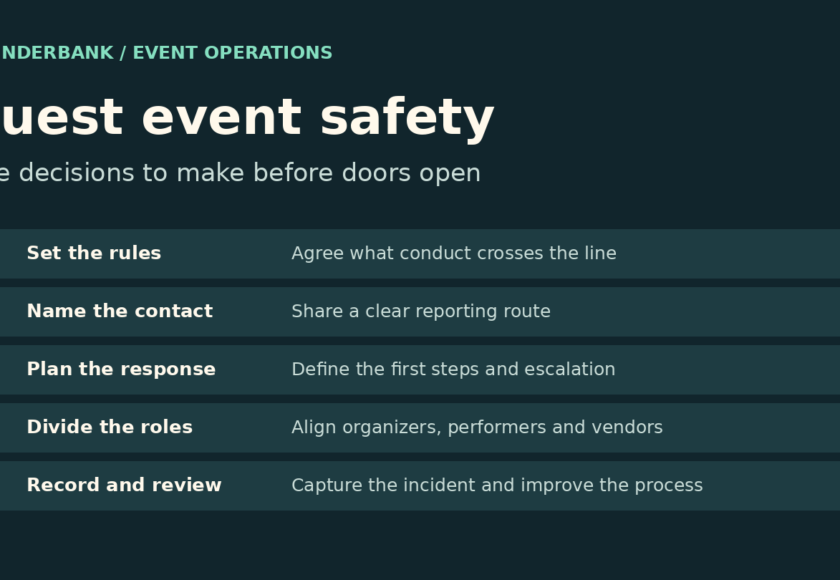
1. 「どこからが迷惑行為か」を主催側の言葉で決める
撮影、サイン、握手、贈り物、SNSでの発信など、ファンイベントでは何を許し、何を断るかが場面ごとに分かれます。判断の基準が人によってぶれると、現場のスタッフは断るべきかどうか迷います。ゲストイベントの進行・責任分担とあわせ、開催前に、禁止する行為を来場者向けの注意事項と社内の対応基準の両方に書き出し、同じ言葉で運営全員が共有できる状態にしておきます。
2. 相談窓口と報告の流れを、出演者側にも見える形で用意する
被害を受けた人が誰に何を伝えればよいかが分からないと、問題は表に出ません。社内スタッフ、委託スタッフ、出演者の担当者それぞれが、当日どこへ連絡するのか、連絡を受けた人が誰に引き継ぐのかを、1枚の連絡系統図にまとめておきます。連絡先は紙とデータの両方で配り、連絡の言語もあらかじめ決めておくと、海外の関係者が参加する場合にも混乱を減らせます。
3. 現場での初動を、断る・離れる・引き継ぐの3段階で決める
現場のスタッフが一人で抱え込まない仕組みが大切です。たとえば、まず決められた言葉で断る、それでも続く場合は担当者を交代する、さらに続く場合は責任者に引き継ぎ、必要に応じて来場者の退場や関係機関への連絡を判断する、といった段階を決めておきます。暴力や差し迫った危険がある場合は、安全確保を優先し、会場の緊急時の手順に従って直ちに警備担当者や関係機関に連絡します。どの段階で誰が判断するのかを事前に書面にしておくと、当日に迷わずに動けます。なお、警備計画の作成や安全上の判断は専門の担当者や事業者の領域です。主催法人がどこまでを自社で担い、どこからを外部に任せるのかを明確にしてください。
4. 出演者・委託先との役割分担を、事前の取り決めに入れておく
出演者の事務所や委託先のスタッフとの間で、迷惑行為があったときの連絡先、対応の権限、記録の取り方、出演の継続可否の判断者を決めておきます。契約書に入れるか、別紙の運営ルールにするかは、関係者や専門家と相談して決めてください。出演者本人や所属先が望まない対応を主催側が独断で進めないよう、事前にすり合わせておくことも大切です。
5. 事後の記録と見直しまでを運営の一部として組み込む
対応した内容は、日時、場所、状況、対応した人、相談を受けた人、その後の連絡をできるだけ客観的に残します。イベント終了後は、記録をもとに運営側で振り返り、注意事項や連絡系統、人員配置を見直します。再発防止は、対応方針や相談体制と並んで、事業主に求められる措置の一つとして厚生労働省の指針で示されています。
FounderBankができること・できないこと
ファウンダーバンク株式会社(FounderBank Inc.)のサービスページには、声優などのネットワークを生かし、企画から制作、グッズ、イベント運営までの実行を支援すると記載されています。一方で、カスタマーハラスメントに関する法的判断、警備や現場対応の代行、相談窓口の運営は、サイトで確認できた支援内容には含まれていません。イベントの企画段階で、出演者の受け入れ方や運営の分担を整理したい法人の方は、下記のお問い合わせからご相談ください。
Before Hosting a Game or Anime Event with Guests: Five Checks on Preparing for Abusive Behavior Toward Performers and Staff
At events with guests such as voice actors, enthusiastic attendees can sometimes cross the line into excessive demands, verbal abuse, or stalking. A page on the Japanese Ministry of Health, Labour and Welfare (MHLW) website states that, from October 1, 2026 (Reiwa 8), all employers in Japan became required to take employment management measures to prevent workplace customer harassment. This article is a practical memo for event organizers: five points to settle internally before you step onto the venue floor. It is not legal advice. Please consult a qualified professional or the competent authority for decisions in your own case.
Background
The MHLW Customer Harassment Prevention Guideline (Notice No. 51 of 2026) describes employment management measures such as communicating the employer’s policy, setting up a reporting and consultation system, and responding to incidents. The guideline covers conduct by customers and other relevant parties, including business counterparties and facility users. Workplace customer harassment involves conduct that exceeds socially acceptable limits in light of the nature of the work and other circumstances and harms a worker’s working environment.
MHLW announced the update to its corporate customer harassment manual on September 8, 2026. Tokio Marine dR summarized the revision in a column dated the same day. For performers and external staff, check the organizer’s legal obligations in light of the contractual and actual working arrangements. The five checks below focus on event operations.
1. Define unacceptable behavior in your own words
Photos, autographs, handshakes, gifts, and social media posts each call for different rules at a fan event. If everyone judges differently, frontline staff hesitate to say no. Before the event, write down the prohibited behaviors in both the attendee notice and the internal response standard, and share the same wording with the whole team.
2. Prepare a reporting route that performers can also see
If people do not know whom to tell, problems stay hidden. Create a one-page chart showing where in-house staff, contracted staff, and the performers' representatives should report during the event, and who takes over from the person who receives the report. Distribute contact details on paper and in digital form, and decide the language of communication in advance, especially when overseas participants are involved.
3. Set the first response in three steps: decline, step away, hand over
No staff member should have to handle this alone. For example: first, decline using agreed wording; if the behavior continues, switch the person in charge; if it still continues, hand over to the event lead, who decides whether to ask the attendee to leave or to contact the relevant authorities. If there is violence or immediate danger, prioritize safety and follow the venue’s emergency procedures to alert security or the relevant authorities immediately. Put in writing who decides at each step. Security planning and safety judgments belong to specialist staff or providers, so make clear what the organizer handles and what is delegated.
4. Put the division of roles with performers and vendors in your agreements
Agree in advance with the performers' agencies and vendors on whom to contact, who has authority to act, how to keep records, and who decides whether a performance continues. Whether to put this in a contract or in a separate operating rule sheet is something to decide with the parties and your advisers. Avoid acting on your own in ways the performer or the agency would not want.
5. Make records and review part of the operation
Record, as objectively as possible, the date, place, circumstances, the people who responded, the person who consulted, and any follow-up. After the event, review the records, then revise the attendee notice, the reporting chart, and the staffing plan. The MHLW guideline identifies prevention of recurrence as one of the measures employers must take.
What FounderBank can and cannot do
The FounderBank Inc. services page says the company supports execution from planning to production, merchandise, and event operations, using its network that includes voice actors. Legal judgments on customer harassment, on-site security or response on your behalf, and running a consultation desk are not among the support services we could confirm on the site. If you are organizing an event and want to sort out how to host guests and divide operations at the planning stage, please use the contact form below.
お問い合わせ / Contact
ご相談は お問い合わせページ からどうぞ(フォームは日本語で、内容確認のうえ2営業日以内に返信するとの記載があります)。
To get in touch, please use the contact page. The form is written in Japanese, and the page states that a reply will be sent within two business days after review.






この記事へのコメントはありません。