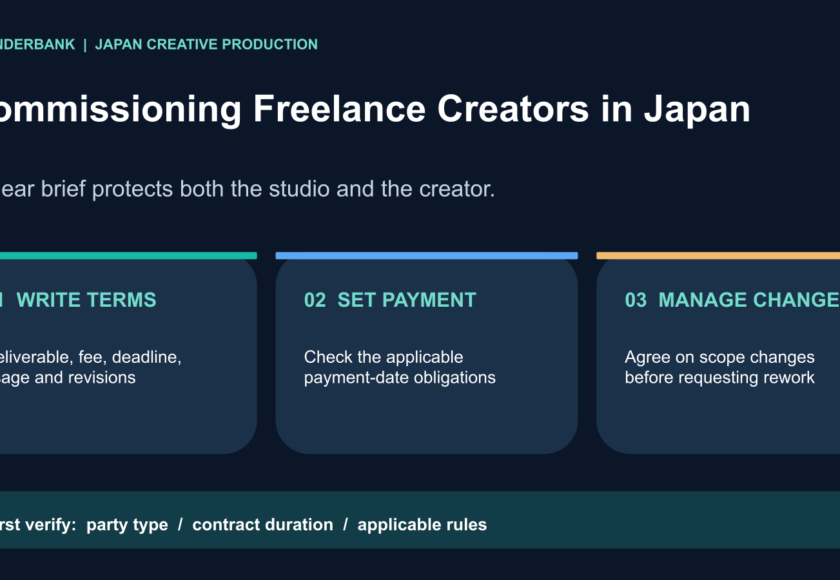
「追加収録も修正も、いつもの範囲だから無料で」――その前提は、発注書で共有されていますか。声優の台本変更、イラストの追加差分、ゲームの仕様変更。制作現場で起きやすい追加作業ほど、納品範囲・対価・変更承認者を発注時に明確にしておく必要があります。本記事は個別の法的結論ではなく、公式資料をもとに発注者が準備するための実務ガイドです。
はじめに:個人への業務委託では「法律上の義務」も確認する
アニメやゲームの制作では、イラストレーター、ライター、翻訳者、音響スタッフ、声優など、個人で活動するクリエイターに業務を委託する場面があります。2024年11月1日に施行された「特定受託事業者に係る取引の適正化等に関する法律」(フリーランス・事業者間取引適正化等法、以下「フリーランス法」)は、こうした取引で発注側に義務を課しています。
本記事では、公正取引委員会のパンフレットに基づき、発注前に確認したいポイントを整理します。なお、本記事は一般的な情報の提供を目的としたもので、法的助言ではありません。自社の取引が対象になるかどうか、どのような対応が必要かは、弁護士などの専門家や所管の行政機関にご確認ください。
1. フリーランス法の概要
公正取引委員会のパンフレットによると、この法律の正式名称は「特定受託事業者に係る取引の適正化等に関する法律」(令和5年法律第25号)で、施行日は令和6年11月1日です。個人が事業者として受託した業務に安定して従事できるよう、取引の適正化と就業環境の整備を図ることを目的としています。
2. 対象になるのは誰か
委託を受ける側の「特定受託事業者(フリーランス)」は、業務委託の相手方である事業者のうち、次のいずれかに当たるものです。
- 個人で、従業員を使用しない者
- 法人で、代表者以外に役員がおらず、従業員を使用しない者
ここでいう「従業員を使用する」とは、週の所定労働時間が20時間以上で、かつ31日以上の雇用が見込まれる労働者を雇用することを指します。同居の親族だけを使用する場合は、従業員を使用することには当たりません。
対象となる取引は、物品の製造・加工、情報成果物の作成、役務の提供の委託です。業種は限定されません。一方、消費者との取引、単なる売買、実質的に労働基準法上の労働者と判断される場合は対象外とされています。
発注側は、フリーランスに業務委託をするすべての事業者(業務委託事業者)が対象です。このうち、個人で従業員を使用する者、または法人で役員が2名以上いるか従業員を使用する事業者は「特定業務委託事業者」とされ、より多くの義務を負います。
たとえば声優の起用では、契約の相手が個人本人なのか、所属事務所などの法人なのかによって、契約の相手方が対象になるかどうかが変わります。相手の形態は、依頼の最初の段階で確認することをおすすめします。
3. 取引条件の明示(第3条)
業務委託をしたときは、直ちに、書面または電磁的方法で取引条件を明示する必要があります。パンフレットでは、口頭だけの伝達は認められないとされています。明示事項には、次のものが含まれます。
- 当事者の名称
- 委託をした日
- 給付(成果物や役務)の内容
- 納期と納品の場所
- 報酬の額と支払期日
制作の現場では、成果物の範囲、修正の回数と範囲、納品の形式などを依頼書や契約書で整理しておくと、後の行き違いを減らしやすくなります。
4. 報酬の支払期日(第4条)
特定業務委託事業者は、給付を受領した日から60日以内のできる限り短い期間で、具体的な支払期日を定めて報酬を支払う必要があります。再委託の場合は、一定の要件を満たせば、元の委託の支払期日から30日以内とする例外があります。収録や納品のスケジュールと、検収の時期、支払日の関係を、発注の前に社内で確認しておくことが大切です。
5. 禁止される行為(第5条)
1か月以上の業務委託では、次の7つの行為が禁止されています。
- 受領拒否
- 報酬の減額
- 返品
- 買いたたき
- 購入・利用強制
- 不当な経済上の利益の提供要請
- 不当な給付内容の変更・やり直し
個別の事案がこれらに当たるかどうかは、状況によって判断されます。たとえば、成果物の修正をお願いする場合は、修正の回数や範囲を事前に明示し、双方で合意しておくと、後からの争いを避けやすくなります。
6. 6か月以上の委託で追加される義務
委託の期間が6か月以上の場合は、フリーランスから申出があったときに、育児や介護などとの両立に配慮する義務があります(第13条。6か月未満は努力義務)。また、契約の解除や不更新をするときは、30日前までの予告が必要で、フリーランスから請求があれば理由を開示する必要があります(第16条)。予告が不要となる例外となる事由も定められています。
このほか、特定業務委託事業者には、募集情報の的確な表示(第12条)と、ハラスメント対策の体制整備(第14条)の義務があります。
7. 違反した場合の対応
パンフレットによると、フリーランスは公正取引委員会、中小企業庁、厚生労働省に申出ができます。行政機関は、報告徴収や立入検査を行えるほか、指導・助言、勧告を行い、勧告に従わない場合は命令・公表を行うことができます。命令に違反した場合は、50万円以下の罰金が科されます。また、申出をしたことを理由とする契約解除などの不利益な取扱いは禁止されています。
声優・ゲーム制作の発注書に追加したい4項目
以下はFounderBankの業務領域を踏まえた実務上の提案であり、法定記載事項をすべて列挙したものではありません。
- 台本・仕様の確定時点:収録前の変更を誰が承認するか。
- 追加収録・修正の条件:修正回数、別料金となる変更、出演者・スタジオの再手配費。
- 納品・検収の記録:データ形式、納品日、確認者、支払期日。
- 利用と再許諾:音声・イラスト・成果物の媒体、地域、二次利用について別途確認する窓口。
2025年9月の公正取引委員会説明資料では、ゲームソフトウェア業やアニメーション制作業への指導例が紹介されています。公正取引委員会の説明資料(PDF)も参照し、制度の適用関係は発注形態と委託期間に応じて確認してください。
8. 発注前のチェックリスト
- 契約の相手が個人か法人か、従業員の有無(フリーランス法の対象かどうかの確認)
- 取引条件を書面または電磁的方法で、発注の直後に提示できる体制になっているか
- 報酬額と、受領日から60日以内の具体的な支払期日
- 成果物の範囲、修正の回数と範囲、納期と納品方法
- 委託期間が1か月以上、6か月以上になる場合に必要な対応
- 契約の中途解除や更新しない場合の手順(予告期間を含む)
著作権や利用範囲の取り決めなど、フリーランス法とは別に整理が必要な事項もあります。契約の内容は、専門家に確認しながら進めてください。
9. FounderBankへのご相談
FounderBankは、サイトの会社概要で、アニメ制作、ゲーム制作、声優キャスティング、イベントプロデュース、グッズ制作、エンターテインメント関連のスタートアップ支援、コンテンツ制作およびライツ管理を事業内容として掲げています。企画から制作、グッズ展開、イベント運営までの実行を支援する体制を紹介しています。
当社は法律事務所ではないため、個別の契約や法令の適用に関する法的助言は行いません。プロジェクトの目的や進め方についてのご相談は、問い合わせページからお寄せください。
“One more revision at no extra cost” is not a scope definition. For voice recordings, illustrations and game assets, agree on the deliverable, change approvals and additional fees before production begins. This is an operational guide based on official sources, not an individual legal opinion.
Outsourcing to Individual Creators and Voice Actors in Japan: Key Points of the Freelance Act on Written Terms, Payment Deadlines, and Prohibited Acts
Introduction: Check Your Legal Obligations When Commissioning Individuals
Anime and game production often involves commissioning individual creators such as illustrators, writers, translators, sound staff, and voice actors. Japan’s Act on Ensuring Proper Transactions Involving Specified Entrusted Business Operators (the Freelance and Business-to-Business Transactions Proper Practices Act, hereinafter the Freelance Act), in force since November 1, 2024, places obligations on the commissioning side of such transactions.
This article summarizes points to check before commissioning work, based on a pamphlet from the Japan Fair Trade Commission. It is general information, not legal advice. Please consult a lawyer or other qualified professional, or the competent government agency, about whether your transactions are covered and what you need to do.
1. Overview of the Freelance Act
According to the Japan Fair Trade Commission pamphlet, the Act’s official name is the Act on Ensuring Proper Transactions Involving Specified Entrusted Business Operators (Act No. 25 of 2023), and it took effect on November 1, 2024 (Reiwa 6). Its purpose is to ensure proper transactions and a sound working environment so that individuals who undertake work as businesses can engage in that work stably.
2. Who Is Covered
A Specified Entrusted Business Operator (a freelancer), on the receiving side, is a business that receives commissioned work and falls under one of the following.
- An individual who does not employ employees
- A corporation with no officers other than its representative and no employees
Here, employing an employee means employing a worker who is scheduled to work 20 hours or more per week and is expected to be employed for 31 days or more. Using only cohabiting relatives does not count as employing employees.
Covered transactions are commissions for manufacturing or processing goods, creating information products, and providing services. No industry is excluded. On the other hand, transactions with consumers, simple sales, and cases judged to involve workers under the Labor Standards Act are not covered.
On the commissioning side, every business that commissions work from freelancers (Entrusting Business Operator) is covered. Among them, an individual who employs employees, or a corporation with two or more officers or with employees, is a Specified Entrusting Business Operator and bears more obligations.
In casting a voice actor, for example, whether the counterparty is covered can differ depending on whether your contract is with the individual or with a company such as an agency. We recommend confirming the counterparty’s form at the start of the request.
3. Stating the Terms of the Transaction (Article 3)
When you commission work, you must state the terms of the transaction immediately, in writing or by electronic means. According to the pamphlet, oral communication alone is not allowed. The items to state include the following.
- The names of the parties
- The date of the commission
- The content of the deliverables or services
- The delivery deadline and place
- The amount of remuneration and its payment due date
In production, organizing the scope of deliverables, the number and scope of revisions, and the delivery format in a request form or contract helps reduce misunderstandings later.
4. Payment Due Date (Article 4)
A Specified Entrusting Business Operator must pay remuneration by a specific due date set as early as possible within 60 days from the date it received the deliverables. For re-commissioning, there is an exception allowing payment within 30 days of the original commission’s payment due date if certain requirements are met. Before commissioning, it is important to check internally how recording or delivery schedules, acceptance inspection timing, and payment dates fit together.
5. Prohibited Acts (Article 5)
For commissions of one month or longer, the following seven acts are prohibited.
- Refusal to accept deliverables
- Reduction of remuneration
- Return of deliverables
- Unreasonably low pricing
- Forced purchase or use
- Requesting the provision of unjust economic benefits
- Unjust changes to the content of deliverables or requiring redoing of work
Whether a specific case falls under these depends on the circumstances. For example, when asking for revisions, stating the number and scope of revisions in advance and agreeing on them with the other party makes disputes easier to avoid.
6. Additional Obligations for Commissions of Six Months or Longer
For commissions of six months or longer, there is an obligation to give consideration to balancing the work with childcare or caregiving when the freelancer requests it (Article 13; for commissions shorter than six months, it is an effort obligation). In addition, when terminating or not renewing the contract, you must give notice at least 30 days in advance and, if the freelancer requests it, disclose the reason (Article 16). Exceptional grounds that make advance notice unnecessary are also provided.
In addition, Specified Entrusting Business Operators have obligations regarding accurate display of recruitment information (Article 12) and establishing a system for harassment countermeasures (Article 14).
7. Responses to Violations
According to the pamphlet, freelancers can file a report with the Japan Fair Trade Commission, the Small and Medium Enterprise Agency, or the Ministry of Health, Labour and Welfare. The administrative agencies can require reports and conduct on-site inspections, issue guidance, advice, and recommendations, and, if a recommendation is not followed, issue orders and make them public. Violating an order is punishable by a fine of up to 500,000 yen. Unfavorable treatment, such as terminating a contract, because a freelancer filed a report is also prohibited.
8. Pre-Commission Checklist
- Whether the counterparty is an individual or a corporation, and whether it has employees (to confirm whether the Freelance Act applies)
- Whether you can provide the terms in writing or by electronic means immediately after commissioning
- The remuneration amount and a specific payment due date within 60 days of receipt
- The scope of deliverables, the number and scope of revisions, and the delivery deadline and method
- Responses required when the commission period reaches one month or six months
- Procedures for early termination or non-renewal, including the notice period
Some matters, such as copyright and the scope of use, need to be organized separately from the Freelance Act. Please proceed with your contract in consultation with a professional.
9. Consulting FounderBank
On its company overview page, FounderBank lists anime production, game production, voice actor casting, event production, merchandise production, startup support related to entertainment, and content production and rights management as its business activities. Its services page describes support for execution from planning through production, merchandise, and event operations.
FounderBank is not a law firm and does not provide legal advice on individual contracts or the application of laws. For consultations about your project’s goals and how to proceed, please use the contact page.
お問い合わせ / Contact
プロジェクトの進め方に関するご相談は、お問い合わせページからご連絡ください。
For consultations about your project, please contact us through the contact page.
参考資料 / References
- 公正取引委員会 フリーランス・事業者間取引適正化等法パンフレット / Japan Fair Trade Commission pamphlet on the Freelance Act
- フリーランス・事業者間取引適正化等法の概要及び勧告事例について(令和7年9月9日、公正取引委員会) / Overview and recommendation cases of the Freelance Act (Sept. 9, 2025, Japan Fair Trade Commission)
- ファウンダーバンク株式会社 会社概要 / FounderBank company overview
- 事業内容 / Services





この記事へのコメントはありません。